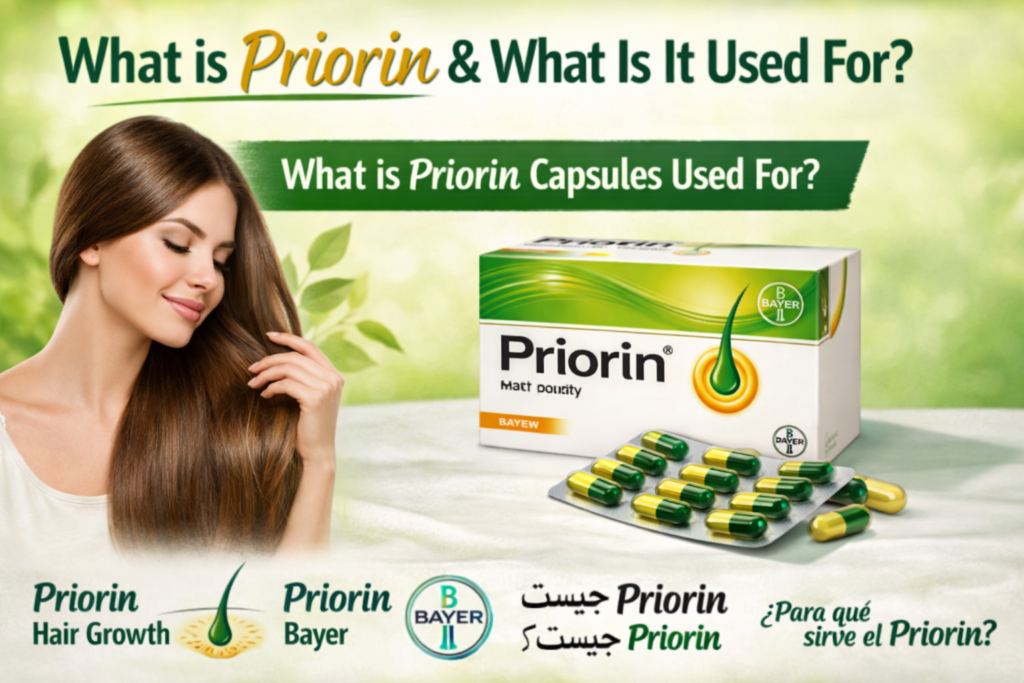
Priorin for Diffuse Hair Loss in Women: Does It Help?
Diffuse hair loss can be difficult to understand because the thinning is spread across the scalp rather than appearing as one obvious bald patch. If you’re considering Priorin for diffuse hair loss in women, the important question is whether a nutritional hair supplement is appropriate for the type of shedding you’re experiencing.
Priorin is designed to support hair health, but diffuse hair loss can have several different causes. Understanding those causes is the first step before deciding whether a supplement makes sense.
What Is Diffuse Hair Loss in Women?
Diffuse hair loss means that hair becomes thinner across a larger area of the scalp rather than disappearing in one clearly defined spot.
Women may notice:
- A wider-looking part
- More scalp showing through the hair
- Increased hair in the shower
- More hair on a brush or pillow
- A smaller ponytail
- Overall reduction in hair volume
Diffuse shedding can be temporary or ongoing, depending on the underlying cause.
Can Priorin Help With Diffuse Hair Loss?
Priorin for diffuse hair loss in women may be considered as nutritional support when inadequate nutrient intake is contributing to poor hair condition.
However, it should not be viewed as a universal treatment for diffuse hair loss.
Possible causes include:
- Iron deficiency
- Other nutritional deficiencies
- Hormonal changes
- Thyroid problems
- Significant stress
- Recent illness
- Rapid weight loss
- Postpartum changes
- Female pattern hair loss
- Certain medications
If the underlying cause is not nutritional, taking a hair supplement alone may not solve the problem.
Priorin and Female Hair Thinning
Female hair thinning can develop gradually, making it easy to overlook at first.
You might notice that your hair still looks relatively normal from the front, while the parting or crown gradually becomes more visible.
Before choosing a supplement, consider how the thinning started.
Was it:
- Sudden?
- Gradual?
- After an illness?
- After childbirth?
- During a stressful period?
- After losing weight?
- Associated with irregular periods or other hormonal changes?
These details can help point toward the likely cause.
Why Nutritional Support Matters
Hair follicles require adequate nutrients to maintain normal growth.
A restricted diet or nutritional deficiency can affect hair quality and shedding. This is one reason nutritional supplements are often considered by women experiencing diffuse thinning.
However, taking additional nutrients when you are not deficient does not necessarily produce better hair growth.
A balanced diet and appropriate medical evaluation remain important.
Priorin for Diffuse Hair Loss After Stress
Stress-related shedding can appear some time after a stressful event.
For example, increased shedding may follow:
- Major emotional stress
- A significant illness
- Surgery
- Severe dieting
- Major weight loss
- Sleep disruption
This type of shedding can make it seem as though a recently started supplement has caused or failed to cause the problem, when the trigger may have occurred earlier.
Priorin for Women’s Hair Loss After Pregnancy
Hair shedding after pregnancy is another common form of diffuse hair loss.
Hormonal changes after childbirth can cause increased shedding as more hairs move into the resting and shedding stages.
If you are experiencing significant postpartum hair loss, it is better to discuss it with a healthcare professional rather than assuming that a supplement is all you need.
Nutritional status can also be relevant during this period.
How Long Does Priorin Take to Show Results?
Hair changes are gradual, so you should not expect an immediate difference after starting Priorin.
If you’re evaluating Priorin for diffuse hair loss in women, track your progress over time rather than judging the product after only a few days.
Useful things to monitor include:
- Amount of shedding
- Hair density
- Part width
- Overall hair condition
- Changes in breakage
Taking photographs under similar lighting can make gradual changes easier to notice.
Priorin Capsules vs Other Hair-Loss Treatments
Priorin is a nutritional supplement, so it is different from treatments specifically designed for particular medical causes of hair loss.
For example, female pattern hair loss may require a different approach from temporary stress-related shedding or iron deficiency.
This is why identifying the cause matters before choosing a long-term treatment strategy.
What Should Women Check Before Taking a Hair Supplement?
If diffuse hair loss continues, a doctor may consider whether there are underlying factors worth investigating.
Depending on your symptoms and medical history, this can include checking for nutritional deficiencies or other conditions associated with hair loss.
Do not assume that every case of diffuse thinning is caused by a lack of vitamins.
Is Priorin Suitable for Every Woman?
Not necessarily.
Before taking any supplement, check the product’s current ingredient list and recommended dosage.
Speak with a healthcare professional before starting a supplement if you:
- Are pregnant or breastfeeding
- Take regular medication
- Have an existing medical condition
- Have unexplained or severe hair loss
- Have recently experienced significant health changes
Common Mistakes When Treating Diffuse Hair Loss
One of the biggest mistakes is changing several products at the same time.
If you start a new supplement, shampoo, serum and treatment together, it becomes difficult to know what is actually helping.
Another common mistake is waiting too long when hair loss is progressively worsening.
Persistent thinning deserves attention, especially when the cause is unclear.
When Should You See a Dermatologist?
Consider professional assessment if you notice:
- Rapidly increasing thinning
- A widening part
- Bald patches
- Persistent heavy shedding
- Scalp inflammation
- Significant itching or pain
- Hair loss with other unexplained symptoms
A dermatologist can assess the pattern and help determine whether further investigation is needed.
Frequently Asked Questions
Priorin may provide nutritional support for hair, but it is not a treatment for every cause of diffuse hair loss. The potential benefit depends on the individual’s nutritional status and underlying cause.
Women can consider Priorin according to the instructions for the specific product. Check the current formulation, dosage and warnings before use.
Hair changes are gradual, so results should not be judged after only a few days. Track shedding and hair condition over a longer period while following the recommended instructions.
Yes. Significant stress can be associated with increased shedding, and the hair loss may become noticeable after the stressful event rather than immediately.
A nutritional supplement should not be assumed to stop female pattern hair loss. If thinning follows a typical pattern or continues to progress, professional assessment can help determine the appropriate treatment.
If you have persistent diffuse hair loss, discussing possible nutritional deficiencies and other causes with a healthcare professional can be more useful than assuming the problem is simply a lack of vitamins.
Final Thoughts
Priorin for diffuse hair loss in women can be considered as part of a nutritional hair-care routine, particularly when nutritional support is relevant. However, diffuse thinning has many possible causes, and a supplement should not be used as a substitute for finding the reason behind persistent hair loss.
If your hair is gradually becoming thinner, pay attention to the pattern, track changes over time and consider professional advice if the problem continues. The right approach depends much more on the underlying cause than on the supplement alone.